Because I'm an alliteration addict, but I digress...
Now that the weather's finally cooling down, I can regularly embrace steeping teas on a regular basis. And although I do enjoy a clean cup of sencha or a robust Darjeeling, lately I have been exploring flavored teas. No, I'm not talking about something that smells like a Bath & Body Works (I'm looking at you, Teavana!) but ones that are more nuanced and delicate, working with the tea leaves natural aromas & flavors rather than trying to mask it.
And here are a few of my favorites for varying moods & occasions:
Something fruity: Thé des Alizés from Palais des Thes'
This Parisian tea company was the one that began my intrigue (& eventual embrace) of flavored teas, back when they were used for Jin Patisserie's afternoon tea service. While it's hard to pick a favorite flavored tea from this company, I'm particularly enamored with this one because the lush, juicy notes of peaches, kiwi & watermelon plays so nicely with the delicately sweet-grassy notes of the green tea. And it's great one to have year-round, since it works amazingly well as an iced tea too!
Something floral: La Vie en Rose from American Tea Room
Friday, October 24, 2014
Monday, August 25, 2014
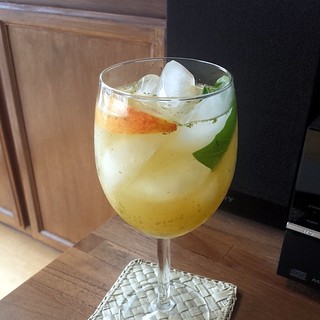
Recipe: Peachy-Basil Sangria
Summer may be rolling to a (too fast) end, but there's still Labor Day weekend & plenty of warm days ahead.
And per my summer potluck/party tradition, that also means it's sangria time! And this year's version might be my favorite yet, since it goes down so easy but has a few touches to keep the flavors interesting. On top of lusciously sweet & fragrant peaches, I've also added a hearty helping of refreshing aromatic basil and a pinch of sweet spices. Then the batched syrup is spiked with a nice slug of gold rum and ready to be combined with some crisp white wine & served when needed.
Peachy-Basil Sangria (for 2 pitchers' worth, approx. 10 to 16 servings)
Ingredients:
3 ripe medium peaches, peeled, pitted and sliced (alternatively, a 12 oz. bag of frozen peaches)
2 cups water
1 cup sugar
1 handful of fresh sweet basil leaves, plus additional for garnish
1 teaspoon ground cinnamon
1/2 teaspoon freshly grated or ground nutmeg
3/4 cup gold rum (I used Mount Gay Eclipse)
2 bottles of light and crisp white wine (I used Flip Flop's pinot grigio)
Ice cubes
1 medium ripe nectarine, for garnish (optional - and I only opted for the nectarine because I don't care for peaches' fuzzy skin)
Virgin option: Omit the rum, swap white wine for dry ginger ale.
Directions:
1. In a medium saucepan, combine water, peaches, sugar, cinnamon and nutmeg. Bring to a gentle boil, then reduce heat and let it simmer uncovered for 15 minutes. Allow it cool on stovetop for 10 minutes afterwards.
2. Place the mixture in a blender along with the fresh basil leaves, then pulse blend until the leaves are pulverized and incorporated. Then add rum to the mixture. The color/appearance will be a bit unseemly but this will improve when combined with the wine. (This mixture can also be stored up to three days in a fridge.)
3. In a pitcher, combine the wine & syrup in a 2:1 ratio and give it a quick stir, garnish with additional basil leaves and nectarine slices. Serve over ice.
Monday, May 5, 2014
Fun Facts Learned During California Avocado Grove Tour
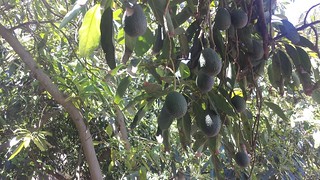
Since Cinco de Mayo is one of the highest avocado-consuming days of the year, I figured its timely to post about my California Avocado tour in the Temecula Valley. And even though my love & familiarity with this buttery fruit spanned decades, I was surprised by the number of things I learned during this one-day outing.
Our first stop was Persea Tree Nursery in Fallbrook, a nursery & greenhouse facility that grows, grafts and sells avocado rootstocks to groves and orchards.
As we toured through the facility, including an "avocado dark room" & swelteringly hot greenhouse (the humidity helps these young plants — which are native to the tropics — thrive,) I picked up on these fascinating tidbits:
- a single avocado pit can supply enough energy to start up to 6-7 plants.
- when properly cared for, a tree can start producing edible fruit in 2 years.
- when stressed, the trees have a tendency to bear fruit on alternate years - resulting in a cycle of high & low yields (and consequently, prices in the market.)
- 95 percent of avocados produced in California are of the Hass variety (I knew they are the most popular, but wasn't aware of how big a majority they made up; meanwhile, I'm crossing my fingers for the giant, round Reeds - my favorite varietal - to take up more of the market share & be more readily available.)
Subscribe to:
Posts (Atom)